Crypto bookkeeping software for USDT and USDC wallets
Chainbook is crypto bookkeeping software for small businesses and teams paid in USDT and USDC on TRON and Ethereum. If you are choosing crypto accounting software for a small business, start with its scope: it keeps the books of those tokens only, and it is neither a tax tool nor an accounting system. Free to start; Pro is $49 a month. Below: what it covers and what it does not.
A month-end close in Chainbook
- Step 1
See what is left to do
Start on the dashboard. Its Needs Attention card shows what the month still lacks, such as transfers without a category or counterparties without a name.
- Step 2
Compare the month with the one before
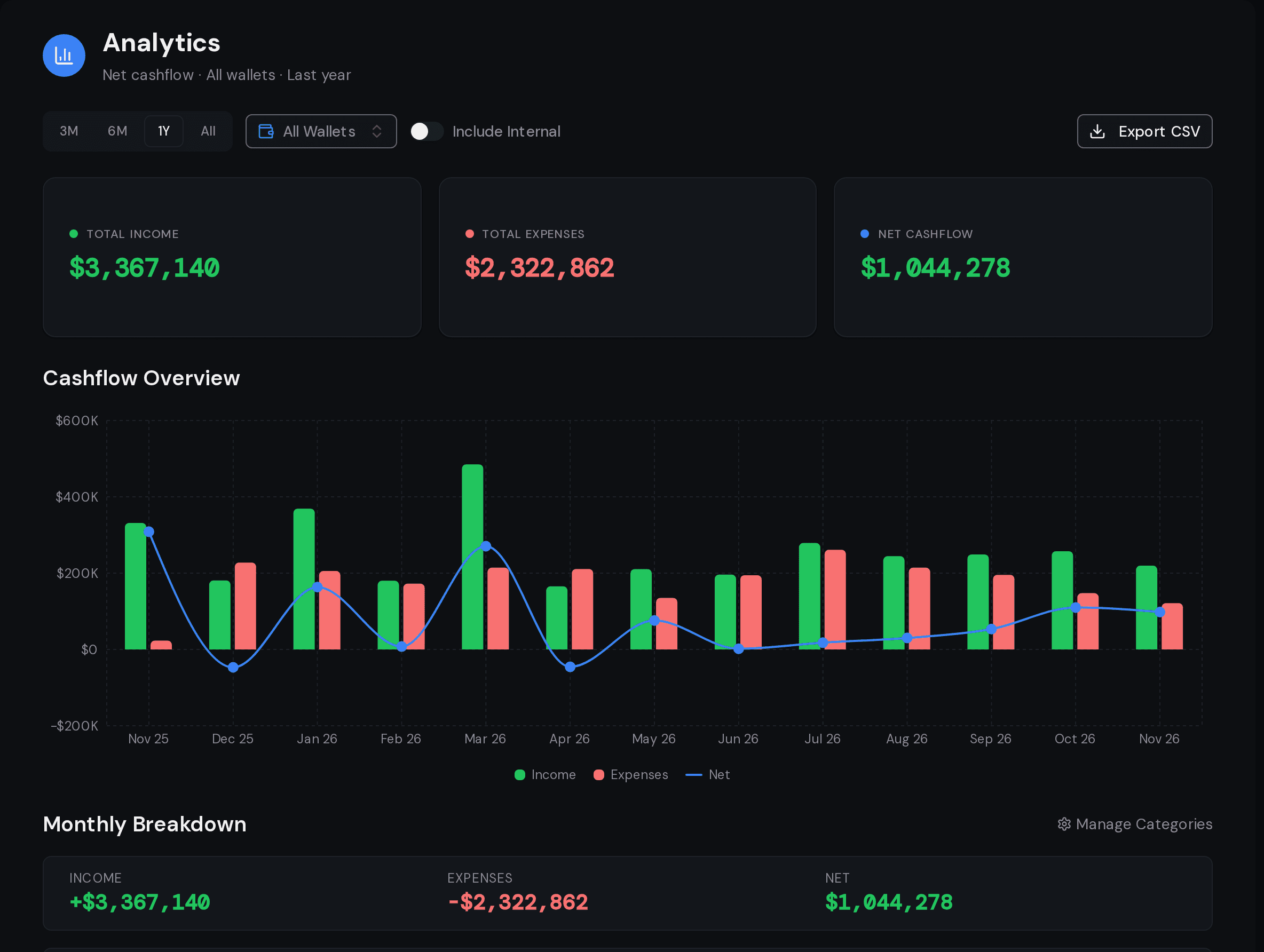
On the analytics page, each total carries its change from the previous period, so a month that spent twice as much stands out before anyone asks.
- Step 3
Hand over the files
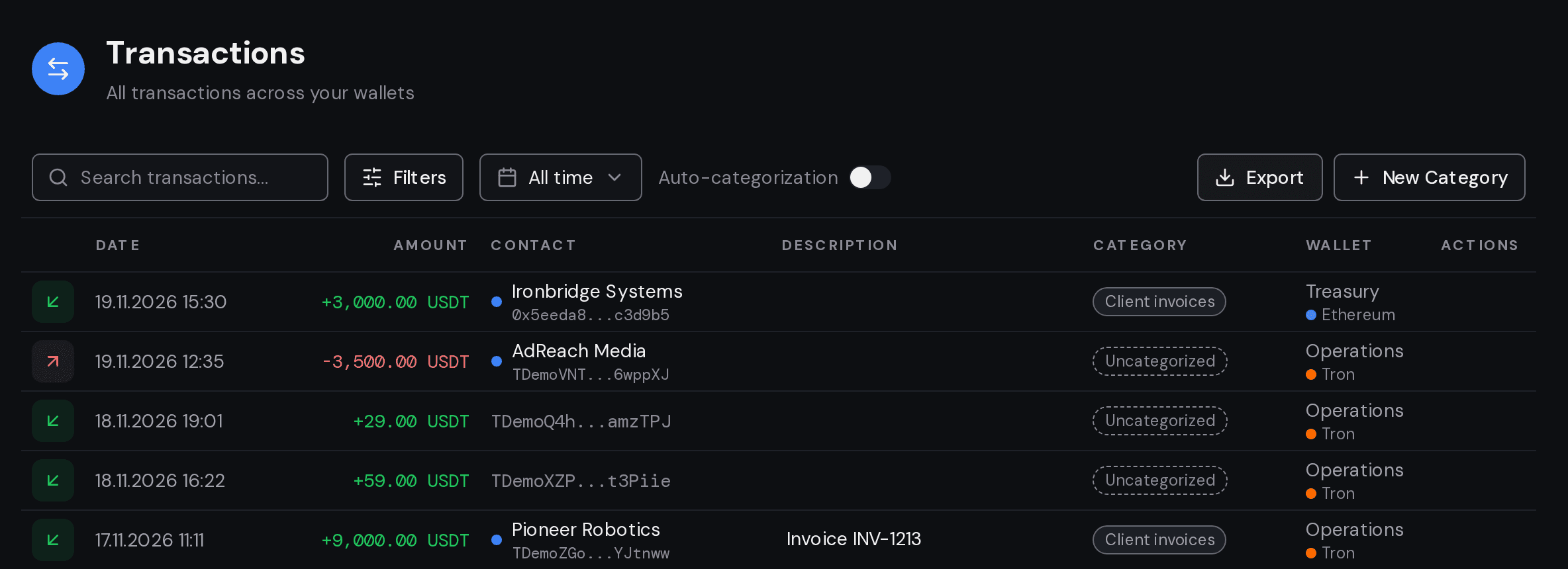
Filter the ledger to the month and export it. Your accountant gets the same columns every month.
What it keeps books for: USDT and USDC, and nothing else
The tokens are USDT (TRC-20 on TRON, ERC-20 on Ethereum) and USDC (ERC-20 on Ethereum). If your business also holds other coins or keeps money at an exchange, those records stay where they are today; Chainbook does not estimate them.
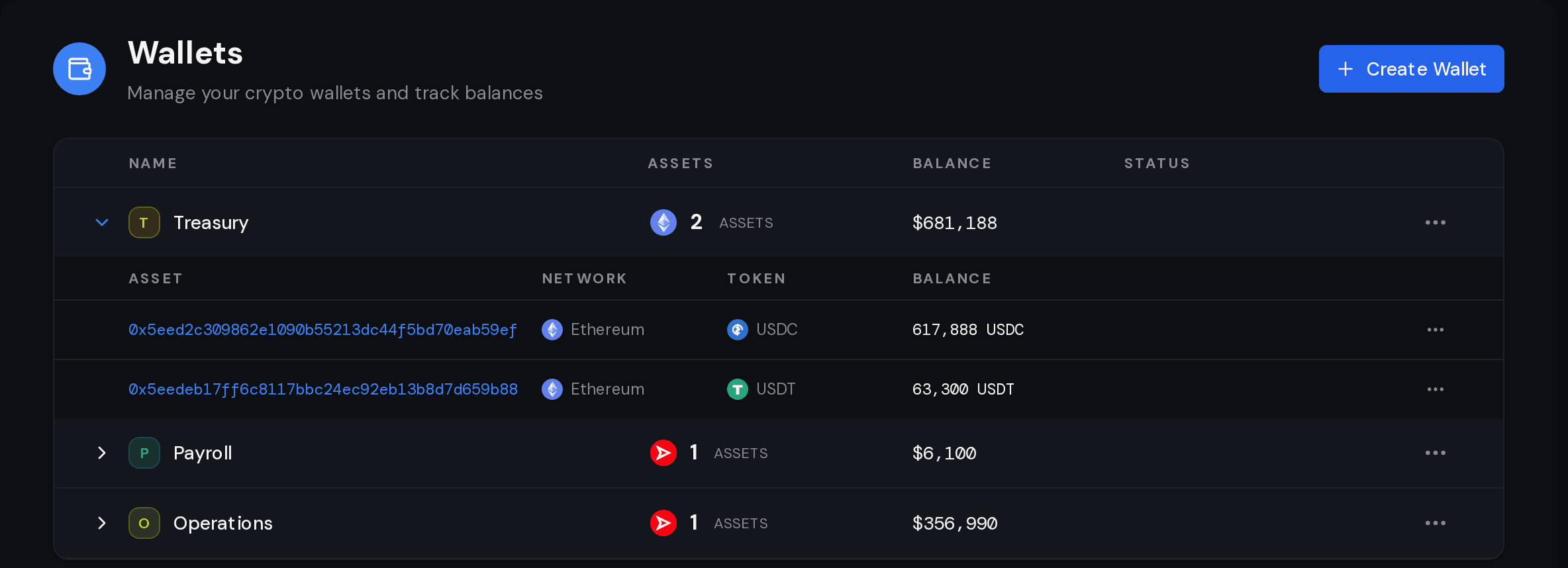
A wallet in Chainbook is a named group of addresses you keep books for, such as Treasury or Operations. It holds no funds. Its addresses are checked every 10 minutes for new transfers. Up to 10,000 transactions per tracked asset (one address with one token); an asset that reaches that stops importing and keeps its history, and the others keep syncing.
What Chainbook is not
- Not a tax-return tool. It does not work out gains, losses, cost basis or tax due, and it files nothing. The person who prepares your return works from the CSV files.
- Not an enterprise sub-ledger. It has no general ledger or chart of accounts, posts no journal entries, connects to no accounting program, and does not keep separate books per legal entity. Your accountant's own system stays the books of record; Chainbook feeds it a file.
- Not a valuation tool. One USDT or USDC counts as one dollar; nothing is valued at a market rate, and there is no price history.
- Not a wallet or a payment tool. It holds no funds or keys, sends no payments, issues no invoices and runs no payroll.
- Not connected to exchanges or DeFi. It reads public addresses only; exchange accounts and DeFi positions are outside it.
Who it suits, and who it does not
It suits a small business or team whose money moves in USDT and USDC: an agency paid by clients, a DAO paying grants, a desk settling with counterparties, a freelancer with a few clients. What they share is a need for one ledger in which every payment has a name, and a file the accountant can open without questions.
It does not suit a fund that trades many tokens and needs cost basis, a group that consolidates several companies, or a business whose history runs past the cap above. Those need an accounting or tax system; Chainbook would cover only a slice of their records.
Other ways to keep these books
A tax-report tool, an enterprise accounting platform, a payments product or a spreadsheet may suit a business more than Chainbook does. Each comparison sets one of them beside Chainbook, using only what that product's own website says, with the page and the day it was read.
What it costs
Free covers 3 wallets, 1,000 transactions/month, 20 transaction descriptions and 1 team member per wallet.
Pro billed annually is $39 a month. A paid plan is bought for a month or a year with an invoice priced in USDT on TRON, and nothing renews automatically.
Each transfer with its type, category and contact
Each transfer gets a type from fixed rules (income, expense, internal transfer or swap), so a move between two of your own addresses, and a swap through one of the 12 exchange and bridge contracts Chainbook recognizes, is kept apart from income and expenses. Categories and contact names are yours to add.
Each part of the product has a page of its own that shows it as it looks in the app; this page does not repeat them.
Your team and your accountant, wallet by wallet
Access is given per wallet, by email invitation, as view or edit, and an accountant you invite needs no plan of their own.
Who uses it, and for what
Agencies paid by clients, DAOs paying grants, freelancers with a handful of clients, OTC desks with many counterparties, and the accountants they work with each have a page of their own.
Questions
Is Chainbook accounting software?
It covers the bookkeeping: a complete, labeled record of your transfers and monthly totals. The accounting entries, statements and tax work are done from its CSV files, by you or your accountant.
Does it work for a business that holds other cryptocurrencies?
Only for its USDT and USDC. Other coins and tokens, and anything held at an exchange, are not imported.
Can I start without paying?
Yes, on the Free plan, for as long as its limits suit you. Pro is bought from Settings; Enterprise is arranged with sales.
Related pages
- USDT transaction trackerTrack USDT payments on TRON and Ethereum in one ledger: every transfer of your addresses, synced every 10 minutes, with names instead of addresses.
- AccountantsHow an accountant gets read-only access to clients' USDT and USDC wallets, sees several clients in one login, and exports CSV with fixed columns.
- FeaturesWhat Chainbook does with your USDT and USDC wallets: address import, the ledger, contacts and categories, analytics, team access and CSV export.